
Open Source Software
OpenCourseWare To Go (2025, MIT License)

I product managed OpenCourseWare To Go. I contributed to the design of the major features and documentation. OCW To Go is an experiment in offering selected MIT OpenCourseWare course materials optimized for offline use on Google Chrome on Android and iOS devices.
VerifierPlus (2023, MIT License)

I product managed the initial development of VerifierPlus. I led the overall development and selected the initial features. I contributed to the design of the major features and documentation. VerifierPlus was the first public verifier for academic W3C Verifiable Credentials in 2023-2024.
Learner Credential Wallet (2021, MIT License)
 I product managed the initial development of the Learner Credential Wallet. I contributed to the design of the major features and documentation. The Learner Credential Wallet was the best in class digital academic credential wallet in 2023-2024 that supported W3C Verifiable Credentials.
Video Concept Browser (2019, MIT License)
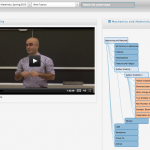 I conceived of, designed and product managed the development of the Video Concept Browser. The Video Concept Browser (VCB) allowed students to browse course videos based on topics / concepts.
Open Embedded Assessments (OEA) Player (2017, MIT License)

I conceived of, designed and product managed the development of the initial implementation of the Open Embedded Assessments. Open Embedded Assessments (OEA) was a set of tools for authoring and embedding formative assessment in any web content.
Unplatform Player (2017, MIT License)
I contributed to the overall scope and feature set of the Unplatform, most importantly the use of ePub2 files to contain learning materials. The Unplatform is a generic, browser-based ePub2 reader for learning materials that can also support embedded assessments and interactive tools, and that can be used in online or offline mode. Unplatform was succeeded by Unplatform2.
CaPRéT (2011, MIT License)
 I conceived of, designed and product managed the development of CaPRéT. When a user cuts and pastes text from a CaPRéT-enabled site: the user gets the text as originally cut, and if their application supports it the pasted text will also automatically include attribution and licensing information and the originating site can also track what text was cut, allowing them to better understand how users are using their site.